


Effective measures for recovering sunburned skin.
1. Sunburn and its effects
Sunburn is a type of surface skin damage caused by ultraviolet (UV) rays from sunlight.
Symptoms of sunburn are easily recognizable and visible to the naked eye within a few hours of sun exposure. However, the resulting skin damage may manifest up to 24 hours later and can lead to serious negative consequences, including skin cancer.
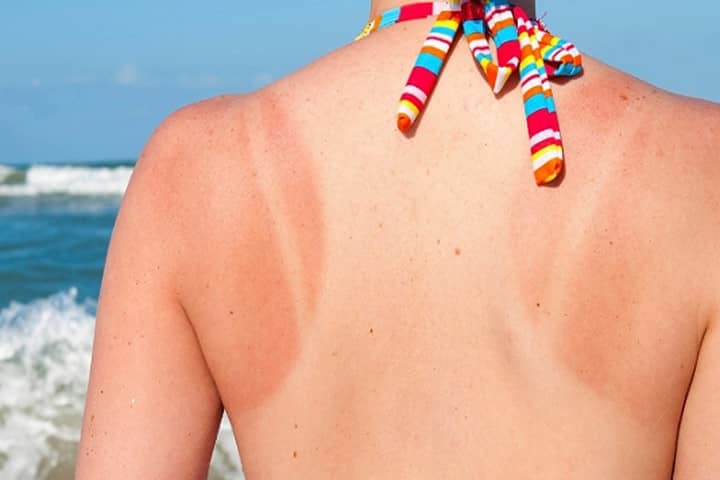
The duration of a sunburn depends on its severity. The levels of sunburn are as follows:
- Mild sunburn typically presents as redness and a mild burning sensation; it can occur on any area of skin exposed to sunlight. This condition usually lasts 3 to 5 days. At this stage, patches of peeling skin may appear over a few days, indicating that the skin is regenerating.
- Moderate sunburn tends to be more painful. Symptoms include redness, swelling, and skin that feels hot to the touch. Moderate sunburns usually take about a week to heal completely, often followed by a period of peeling skin lasting a few days.
- Severe sunburn. This is considered a critical stage, as the skin may develop blisters and intense redness and feel very painful. Recovery at this level can take 2 to 3 weeks. If you experience this, you should see a doctor for timely treatment and limit going outdoors or exposing yourself to sunlight.
2. Factors affecting sunburn recovery time
"Will a sunburn go away on its own?" and "How long does a sunburn last?" are questions that concern most people.
The speed of skin recovery depends on several factors, as every individual's body reacts differently to sun exposure.
These factors include: having fair or light skin; having freckles; exposure to sunlight between 10:00 AM and 3:00 PM; living near the equator; sunbathing; or using medications that increase the skin's sensitivity to sunlight.
3. Sunburn recovery time
Recovery time varies depending on the severity of the sunburn.
- For skin redness caused by sun exposure: Redness typically appears 2 to 6 hours after exposure. It peaks at the 24-hour mark and then gradually subsides over the next 1 or 2 days. More severe sunburns may take longer for the redness and burning sensation to fade.
- For sunburns causing pain and burning: Pain usually begins within 6 hours of sun exposure and peaks around 24 hours, often subsiding after 48 hours. Over-the-counter pain relievers like Ibuprofen or Aspirin can help alleviate discomfort. Additionally, applying cold compresses or taking cool baths can help soothe the burn.
- For sunburns causing swelling: Swelling can last for about 2 days, or longer in cases of severe burns. Over-the-counter pain relievers such as Ibuprofen or Aspirin can help manage discomfort, while corticosteroid creams can be used to reduce swelling and inflammation.
- For sunburns causing blistering: Blisters resulting from moderate to severe sunburns may appear 6 to 24 hours after sun exposure, though they can sometimes develop days later. Since blisters indicate a moderate to severe burn, they may persist for more than a week. If blisters form, take care not to let them rupture. The body forms blisters to protect the skin and facilitate natural healing; however, if these blisters rupture, the healing process is delayed, and the risk of infection increases. If a blister breaks on its own, the area should be cleaned and covered.
- Regarding skin peeling due to sunburn: Peeling typically begins after a sunburn occurs. This process lasts for several days and ceases once the skin has fully healed. For mild to moderate sunburns, peeling may take about a week, whereas severe cases can involve peeling that lasts for several weeks. Therefore, it is important to stay well-hydrated during this time to help the skin heal more quickly.
4. Effective measures for recovering sunburned skin
Cooling the skin
This is a highly effective method for recovering sunburned skin. You can apply a cold compress or a towel wrapped around ice to the affected area.
However, cooling should be done gradually to allow the skin to adjust to the temperature. Avoid applying ice directly to the skin without a cloth or towel covering, as this can cause frostbite.
Hydrating the body
Water plays a vital role in the body's health. Sunburn often leads to significant fluid loss, so it is essential to replenish fluids to keep the skin plump and healthy. Increasing water intake is particularly important if the skin has begun to peel.
Treating sunburn with natural remedies
These remedies are simple and easy to apply at home, though they are best suited for mild to moderate sunburns.
You can use fresh aloe vera or pure aloe vera gel to soothe the burning sensation and moisturize the skin. Applying honey to the sunburned area and rinsing it off with clean water after 15–20 minutes can also be effective. Additionally, mixing oatmeal into your bathwater and soaking your body in the mixture can help, as oatmeal possesses anti-inflammatory properties beneficial for sunburned skin.
Furthermore, protect your skin by using sunscreen and wearing protective clothing when outdoors. Try to avoid going out between 10:00 AM and 4:00 PM.
- Web: Thẩm mỹ Hoa Anh
- Hotline: 0948.702.288.


