


How does ice help treat acne?
Benefits of Ice for Acne Treatment
Can ice treat acne? Ice offers many remarkable benefits that often go unnoticed. Here are some specific ways ice benefits the skin:
- Tightening pores: The low temperature of ice stimulates skin cells to contract; when combined with gentle massage, this helps tighten enlarged pores. However, ice should not be applied to the skin for more than 1–3 minutes at a time.
- Skincare: Ice helps combat aging and minimize wrinkles. For optimal results, it should be used in conjunction with other skincare products.
- Reducing swelling and dark spots caused by acne: Note, however, that this is merely a temporary measure and should not be overused.
- Improving oily skin: Washing your face with water in which ice has melted can help manage excess oil production by providing necessary hydration to the skin.
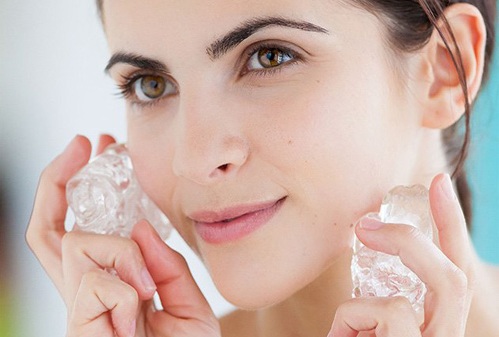
How does ice treat acne?
Treating acne with ice will depend on each person's skin type and bring different acne treatment effects. However, if your acne is long-standing, you should consider using ice to treat acne instead of looking for other treatment methods. So how to use ice to treat acne effectively?
- Wrap the ice in a thin towel so your skin doesn't come into direct contact with the ice, causing frostbite.
- Apply ice combined with gentle massage of the acne-prone skin area.
- Do not leave ice on one area of skin for too long.
- After about 1-3 minutes, use a soft cloth to wipe again
- Using the ice compress method about 3-4 times/week, dark acne on the skin will improve.
Is ice good for treating acne?
Currently, there is no in-depth research in beauty about using cold ice to treat acne. Therefore, you should consider carefully before using this method to treat acne. Below are the advantages and disadvantages of the cold ice method to treat acne.
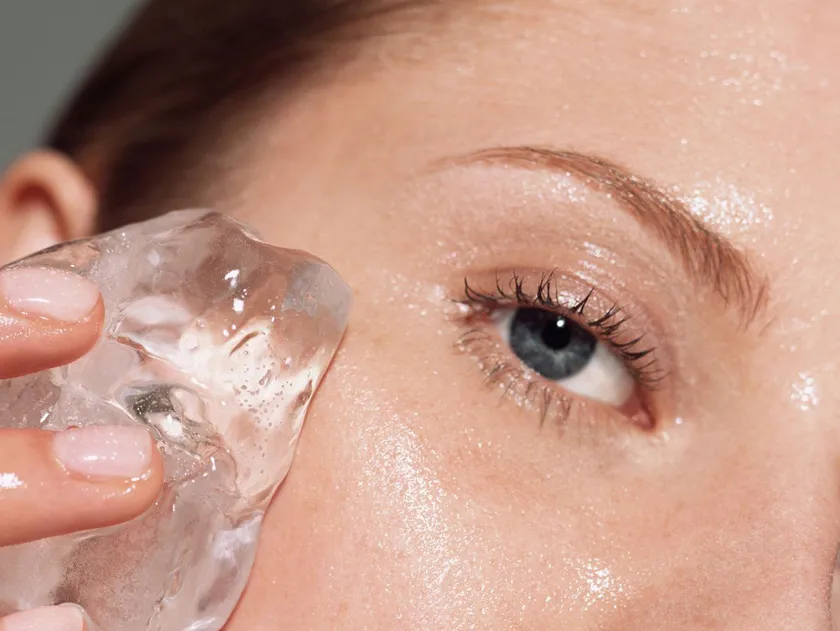
Pros:
- Simple.
- Cost-free (provided you have a refrigerator).
- Safe for the skin.
- Painless.
- Effective for treating acne.
Cons:
- Not suitable for skin that is easily irritated or sensitive to low temperatures.
- Results are slower to appear and require more time and effort.
- Improper use can cause skin irritation and mild frostbite.
Note: To enhance the effectiveness of ice-based acne treatment, combine the ice with the following ingredients:
Combining ice with rose water
Rose water possesses anti-inflammatory properties that help disinfect the skin and prevent acne formation. Additionally, it helps balance the skin's pH levels, tighten pores, and effectively reduce wrinkles. Rose water is suitable for all skin types and causes no side effects. You can use it as follows:
- Mix rose water and clean water in a 2:1 ratio, then place the mixture in the freezer until it solidifies into ice.
- Next, wrap an ice cube in a thin towel and apply it to the affected area for 1–3 minutes, then pat the skin dry with a soft towel.
- Perform this routine three times a week for optimal results.
Combining ice with green tea
Green tea is highly beneficial for health and is widely used in at-home beauty treatments. Thanks to its antibacterial and purifying properties, it helps reduce swelling and prevents acne spots from forming.
- Pour brewed green tea (cooled to room temperature) into an ice cube tray and freeze for several hours.
- Wrap a green tea ice cube in a small towel and gently rub it over the acne spots for a few minutes.
- Use this method three times a week; acne spots will fade and eventually disappear within a short period.
As with other at-home acne treatments, using ice requires consistency to achieve the desired positive results.
- Web: Thẩm mỹ Hoa Anh
- Hotline: 0948.702.288.


